
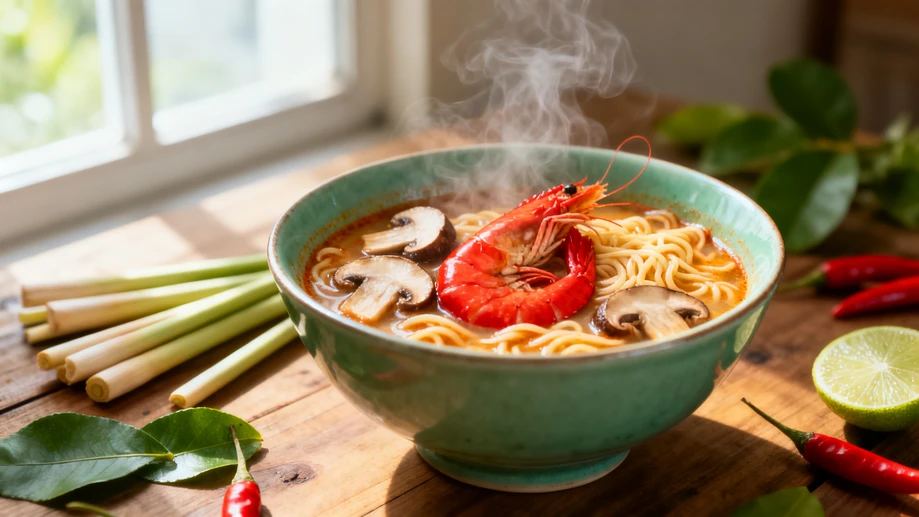
Is Your Tom Yum Goong Secretly Sabotaging Your Health Goals?
Debunking the biggest coconut milk myth that could turn your favorite Thai soup from hero to villain
Picture this: you're cozied up in your favorite Thai restaurant, spoon hovering over that steaming bowl of fragrant tom yum goong. You've heard it's packed with immunity-boosting ingredients, so you dive in guilt-free. But what if that creamy texture you love is quietly derailing your wellness journey? The culprit isn't the shrimp or spices – it's the coconut milk assumption.
Many food lovers believe all tom yum contains thick, rich coconut milk. This misconception leads health-conscious diners to avoid the soup entirely, fearing unnecessary calories and saturated fats. Yet here's the delicious truth: authentic tom yum goong often skips coconut milk altogether. The signature creamy appearance? That comes from vigorously pounding aromatic herbs and slowly simmering shrimp shells to create a naturally luxurious broth.
Restaurants frequently offer two versions: tom yum nam sai (clear broth) and tom yum nam khon (with coconut milk). The clear version packs all the lemongrass, galangal, and kaffir lime leaf benefits with minimal fat. Next time you order, simply ask for "clear style" to enjoy those anti-inflammatory properties without compromising your goals.
Surprisingly, even the coconut milk version holds nutritional merits when consumed mindfully. The medium-chain triglycerides in quality coconut milk provide quick energy, while chili compounds boost metabolism. The key lies in portion control – savor a small bowl as an appetizer rather than main course. Pair it with steamed vegetables instead of fried rice to balance your meal.
Don't let misinformation steal your tom yum joy. By understanding broth variations and practicing mindful eating, you can relish every spoonful of those tangy-spicy flavors while staying aligned with your health objectives. Your taste buds and waistline might just become the best of friends.